
Driving without valid insurance in the UK carries serious consequences. For many drivers, it begins with a moment of confusion at the roadside and quickly escalates into fines, penalty points and even vehicle seizure. What often catches people off guard is how quickly costs accumulate once police are involved.
Understanding the full picture helps reduce panic and allows you to respond calmly if it happens.

Is Driving Without Insurance a Criminal Offence?
Yes. Under the Road Traffic Act 1988, it is a criminal offence to use a vehicle on a public road without at least third-party insurance.
Even if you believed you were insured, the responsibility rests with the driver. Administrative errors, incorrect assumptions about policy coverage or expired policies do not usually prevent enforcement action.
Fixed Penalty for No Insurance
If the case is straightforward, police may issue a Fixed Penalty Notice.
Standard fixed penalty:
- £300 fine
- 6 penalty points
For many drivers, those six points are the most damaging part. They stay on your licence for four years and are visible to insurers.
Court Penalties and Fines
More serious cases go to court. This might happen if:
- You already have points on your licence
- You were involved in a collision
- You refused a fixed penalty
A magistrates’ court may impose:
- An unlimited fine
- 6 to 8 penalty points
- A discretionary driving ban
Fines are income-based and could reach into the thousands.
Penalty Points and the IN10 Conviction
An uninsured driving offence results in an IN10 conviction code on your driving record.
This code signals to insurers that you were previously uninsured. Many insurers treat this as high risk.
Premiums may rise significantly and could remain elevated for five years or more.
Vehicle Seizure and Impound Costs
Police have the power to seize vehicles under Section 165A of the Road Traffic Act.
If your car is seized:
- It is taken to a secure impound yard
- You must provide valid insurance covering impound release
- You must pay recovery and storage fees
Typical charges may include:
- £150–£200 recovery fee
- £20–£30 per day storage
- Additional administrative charges
If the vehicle is not collected within a set period, it may be destroyed or auctioned.
This is often where stress escalates. Many drivers discover that standard annual insurance does not cover release from a compound requirements. Specialist cover may be required.
If your vehicle has already been seized, the next step is arranging insurance that specifically covers impound release. You can request a fast, tailored quote, through us here:
👉 https://impoundrelease.co.uk/get-a-quote/
Can You Be Disqualified?
A driving ban is possible, particularly if:
- You already have points
- You are a new driver within two years of passing your test
- The offence involved aggravating factors
New drivers who accumulate six points within two years of passing may have their licence revoked under the New Drivers Act.
What Happens If You Are Caught at the Roadside
Police often detect uninsured vehicles using ANPR cameras. These systems automatically compare vehicle registration numbers against the Motor Insurance Database.
If flagged:
- You may be stopped immediately.
- Officers check insurance status.
- If no valid cover is confirmed, the vehicle may be seized.
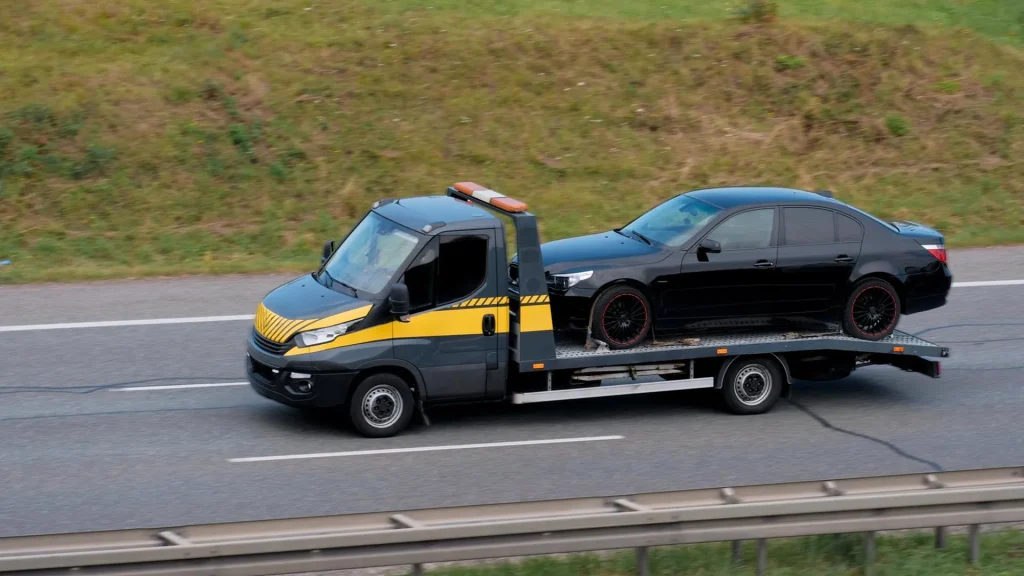
From the driver’s perspective, it often feels sudden. One moment you are commuting. The next, you are arranging transport home while your car is being loaded onto a recovery truck.

The Long-Term Impact on Insurance
The financial impact rarely ends with the fine.
Drivers with an IN10 conviction may experience:
- Higher premiums
- Limited insurer options
- Higher excess requirements
- Refused quotes from mainstream providers
Even careful driving afterward does not immediately remove the risk classification.
How to Avoid Escalating Costs
If your vehicle has been seized:
- Do not delay arranging appropriate insurance.
- Confirm the policy explicitly covers impound release.
- Bring all required documentation to the pound.
- Acting quickly may reduce storage charges and prevent the destruction of the vehicle.
Conclusion
Driving without insurance penalties UK drivers face are more than a single fine. They may involve criminal conviction codes, vehicle seizure, escalating fees and long-term insurance difficulty.
For many people, the hardest part is not the roadside stop but the administrative and financial consequences that follow. Understanding what may happen allows you to respond with clarity rather than panic.
If your vehicle has already been impounded, arranging suitable impound insurance cover promptly may prevent the situation from worsening.


